Does Your Dog Make the List of the Dumbest Dog Breeds?

Why are the dumbest dog breeds considered “dumb”? Are the canines we refer to as the dumbest dogs just the ones who are harder for humans to train?

The Border Collie is widely considered to be the world’s smartest dog breed (with the Poodle coming in close second). If some dog breeds are the smartest, it only makes sense that some dog breeds are the dumbest, right? An internet search for dumbest dog breeds will turn up numerous lists of those breeds people think are less intelligent in some ways.

First, what determines the smartest and dumbest dog breeds?

What determines which dogs are among the dumbest dog breeds? Chow Chows.

So, just what makes a dog smart — or puts him in the rankings for the dumbest dog breeds? Is it simply how trainable he is? His ability to remember things? Sense of direction? Energy level? Something else?

In 1994, a psychologist named Stanley Coren, PhD., DSc., FRSC, wrote a book called The Intelligence of Dogs (Atria Books). Dr. Coren ranked more than 100 dog breeds based on three specific types of intelligence:

  1. Instinctive intelligence (ability to perform tasks it was bred to perform like herding or hunting)
  2. Adaptive intelligence (ability to independently problem solve and learn from previous experiences)
  3. Working and obedience intelligence (ability to learn when being taught by humans)

In The Intelligence of Dogs, Dr. Coren’s top 10 smartest breeds in order of intelligence were:
  1. Border Collie
  2. Poodle
  3. German Shepherd Dog
  4. Golden Retriever
  5. Doberman Pinscher
  6. Shetland Sheepdog
  7. Labrador Retriever
  8. Papillon
  9. Rottweiler
  10. Australian Cattle Dog

The 10 lowest-ranking breeds (or the dumbest dog breeds) according to the book were (in descending order):
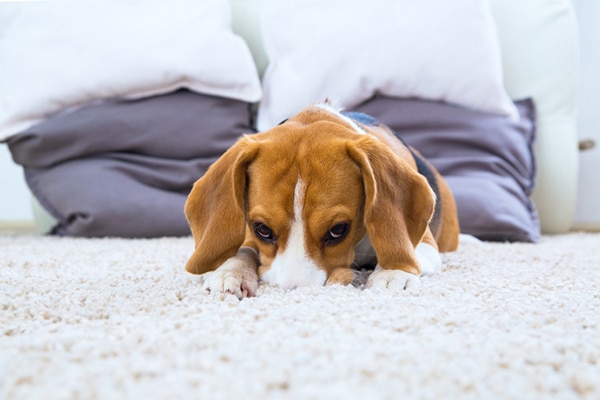
A beagle lying down on a deep carpet.

  1. Basset Hound
  2. Mastiff
  3. Beagle
  4. Pekingese
  5. Bloodhound
  6. Borzoi
  7. Chow Chow
  8. Bulldog
  9. Basenji
  10. Afghan Hound

So, does this mean these are the 10 dumbest dog breeds? Well, not necessarily.

Remember: all dogs have, and were bred for, different skills

“How smart you appear to be depends on the test,” says Nicholas Dodman, BVMS, Dipl. ACVB, professor emeritus and former section head and program director of the Animal Behavior Clinic at the Cummings School of Veterinary Medicine at Tufts University. “Until quite recently, I had two dogs. One of them was hyper and the other dog would sort of lie around like a lump. You would say Jasper was not as smart as Rusty. But once you were out on a trail, Jasper lit up. He was doing the job that nature intended him to do because he was a coonhound, and he was using his super-intelligent nose. He was brilliant at his job, but not so good at some other things.”

It’s no secret that purebred dogs have very different skills depending on what they were bred to do. For instance, herding breeds like Border Collies, Australian Shepherds and Corgis are universally considered to be extremely intelligent. Due to the nature of their work, they are excellent at both making independent decisions and taking instructions from humans.

Why are hound dogs considered to be among the dumbest dog breeds?

Why do so many hound dog breeds make the list of dumbest dogs breeds? “Pretty much all scenthounds are governed by their noses,” Dr. Dodman says. “They’re hard to train because they don’t really look up, they look down. They’re not really interested in listening or pleasing anybody, they’re just interested in tracking with their noses. The sighthounds want to chase anything that moves. For every dog breed there’s a purpose, and the mixed breeds are just a combination of the purebreds. I can see how it might be easy to superficially judge a dog who is kind of slow and not paying a lot of attention to what you say and really not that interested in performing tricks, but it doesn’t mean that they’re not smart, and in some ways, being very independent could be more intelligent than being obedient.”

Scenthounds like Basset Hounds, Beagles and Bloodhounds can sniff out almost anything. Sighthounds can spot their prey making the slightest movement and swiftly chase it down. A Border Collie is far more trainable than a Bloodhound, but a Bloodhound is far superior at tracking scents than a Border Collie. They each have different skills, but they excel in their own ways.

Determining the dumbest dog breeds presents the same issues as determining human intelligence

Dr. Dodman notes how gauging human intelligence can present a similar conundrum to determining the dumbest dog breeds. “It just depends on how you grade people,” he explains. “Some people are good at math, some people are good at English. You can be good at some things and not so good at others.”

Considering the vast differences in skill sets among dogs, and taking into account the fact that dogs don’t speak our language, how can we accurately assess a dog’s intelligence and thus, the dumbest dog breeds? “It seems to be like multiple intelligences,” Dr. Dodman says. “Do you measure them as being particularly bright like Jasper, almost a savant, when it came to hunting? Or do you have to average out all the behaviors over 10 different types of behavior and give them an average score, which I imagine would come back to be pretty much the same for all dogs?”

Brian Hare, Ph.D., associate professor of evolutionary anthropology at Duke University in North Carolina, and founder of the Duke Canine Cognition Center, studies dog psychology. “We play the same types of games that researchers play with young children,” he says. “We give dogs puzzles to solve, and the choices they make reveal how their minds work.”

According to Dr. Hare, dog intelligence and the dumbest dog breeds are not black and white matters. “I don’t really think there is any such thing as ‘smart’ dogs and ‘dumb’ dogs,” he states. “That is just a throwback to a linear version of intelligence, as though intelligence is a cup of coffee that is more or less full. Different dogs are good at different things. And all of them are geniuses in their own way.”

In fact, some of the research on dumbest dogs might not be accurate

As it turns out, some of the research done to determine the most intelligent dogs or dumbest dog breeds might not be entirely accurate. “The scientific work on breeds has not really held up,” Dr. Hare states. “Most breeds are only 150 years old, so there is very little to distinguish them. To scientifically prove the smartest breed, you would need to compare at least 30 dogs from each breed. They would have to be puppies raised and tested in a similar manner to control for the effect to rearing history and age on performance. If you took the AKC breeds or all breeds worldwide, you would need between 6,000 to 12,000 puppies, decades of work, millions of dollars and about a thousand graduate students. It is no wonder no one has done it.”

In fact, in his own research, Dr. Hare has seen as much variation within a breed as between them. “For example, Labradors bred for the military are the same breed as Labradors bred to be assistance dogs — and you have never seen two more different dogs in your life,” he explains.

Humans categorizing certain breeds as the dumbest dog breeds is less about truly measuring their intelligence and more about not understanding the breed’s particular skillset.

“No individual dog or an entire breed should be considered ‘dumb,’” says Gina DiNardo, executive secretary for the American Kennel Club. “Ease of training is not an accurate way to assess a dog’s intelligence. What we humans may perceive as an animal being ‘dumb’ may be independence, stubbornness or aloofness, which are common characteristics in many breeds. Training takes time and patience, and every dog is different. Learn different training techniques available, and if you are having problems, seek out a trainer who can give you the skills that you need to teach your dog.”

So, what is it about certain breeds that caused them to end up as the dumbest dog breeds in Dr. Coren’s book The Intelligence of Dogs? Let’s take a look at each of the supposed dumbest dog breeds.

The 10 Dumbest Dog Breeds and Why They’ve Been Characterized as “Dumb”

1. Afghan Hound
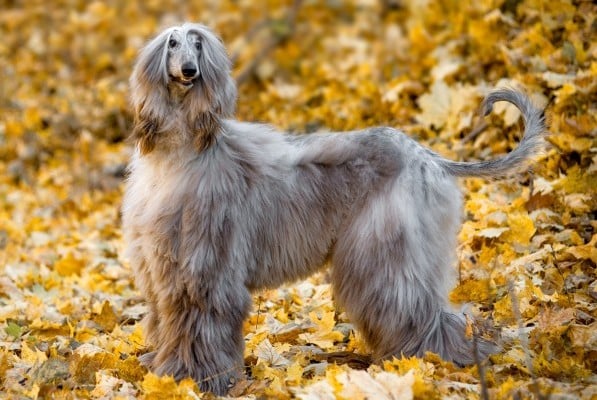
Afghan Hound.

The Afghan Hound tops the dumbest dog breeds list according to The Intelligence of Dogs, but Afghan lovers surely disagree. Afghans are sighthounds, which means they were bred to hunt using their extraordinary speed and eyesight. Like many sighthounds, Afghans can be aloof, which means they can be a little standoffish and reserved, especially with strangers. They can also be stubborn and independent. Due to these traits, Afghans are not easy to train, but that doesn’t mean they’re dumb. They simply prefer to think for themselves and do things on their own terms. You might have to be more creative when training an Afghan, but their elegance, regal air and devotion to their humans makes them special companions.

2. Basenji
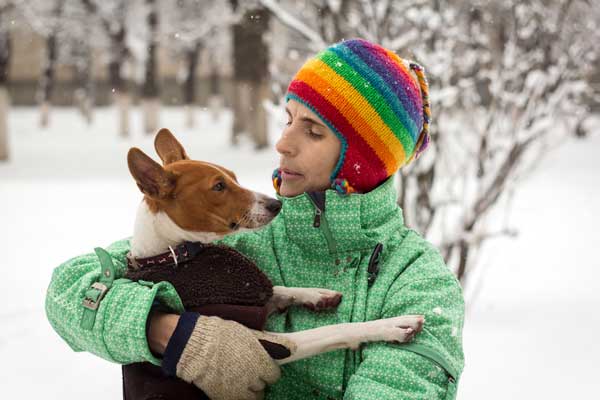
The Basenji is another sighthound known for his independence and aloofness. Some people describe this breed as having feline qualities, and in fact, many Basenjis will groom themselves like cats. The breed has earned a reputation for being “untrainable,” but again, ease of training is not always an accurate indicator of intelligence. Quite the contrary, Basenjis are intelligent, curious and playful. Like inquisitive toddlers, they are smart enough to get into trouble if you don’t watch them carefully. Raising a Basenji can sometimes feel like taming a wild animal. They are watchful and wary, and although most bond with their owners, they may or may not like your friends. Bottom line: Basenjis are stubborn so they aren’t consistently obedient, but they can be trained. Positive methods are best.

3. Bulldog
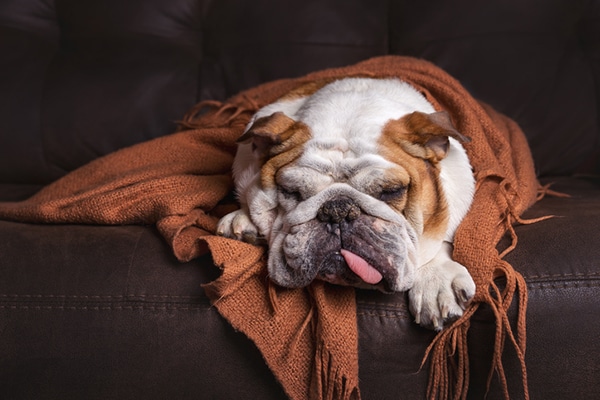
A dog sleeping with his tongue out.

Another breed known for stubbornness on the list of dumbest dog breeds is the Bulldog. The term “bullheaded” fits the Bulldog to a T. For this reason, Bulldogs can be difficult to train, but dumb? You only have to look to one of the famous skateboarding or surfing Bulldogs to see that they are definitely capable of learning. Bulldogs are also labeled as lazy, but clearly some enjoy more vigorous activities than lying on the couch.

4. Chow Chow
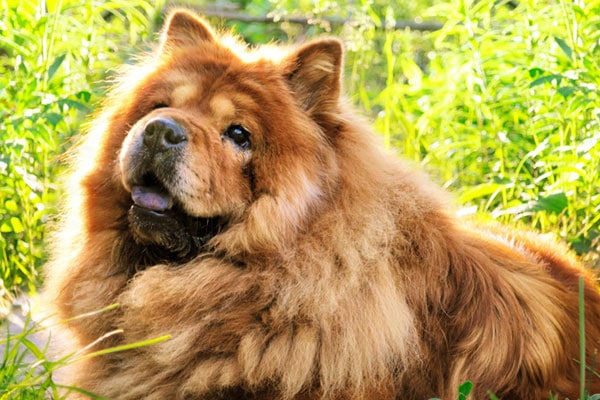
A Chow Chow dog.

Chow Chows might look like adorable teddy bears, but they are not always the cuddly type. Originally bred to be guard dogs, Chows are serious, independent and aloof. They are strong-willed and stubborn, and therefore more difficult to train. Chows are intelligent — they just have minds of their own. If not trained correctly, Chows might challenge their humans for authority, which can become problematic. For these reasons, Chows require firm but fair training and extensive socialization starting from an early age. When raised properly, Chows are noble, loyal and devoted companions.

5. Borzoi
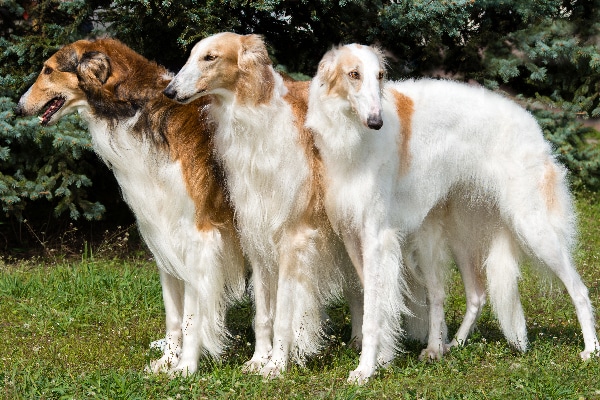
Borzoi.

Yet another sighthound, the Borzoi is an independent freethinker. They can also be stubborn, so training a Borzoi is an exercise in patience. Borzois seem to do best with frequent, short training sessions rather than hour-long classes. In the house, they are generally very well-mannered, calm, clean and quite affectionate, especially with their special people.

6. Bloodhound
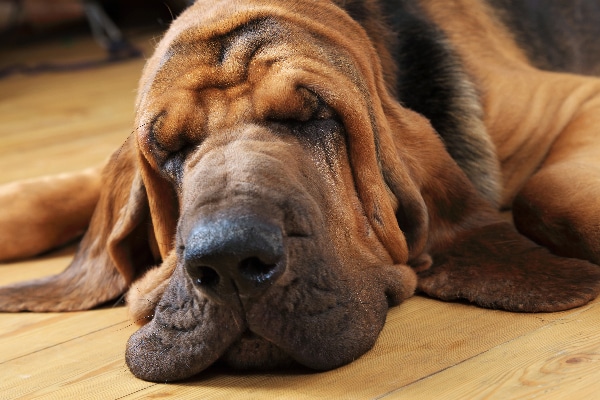
Bloodhound.

If you have ever witnessed the aurora borealis, the colorful northern lights display that transforming the night sky into a brilliant sight to behold, you might be able to understand how a scenthound like the Bloodhound “sees” the world with his sensitive nose. Bloodhounds make the list of dumbest dog breeds and are hard to train because they are so distracted by all the glorious scents just waiting to be investigated. They also have a ton of energy, are stubborn and independent, and are absolutely relentless when on a scent trail. Combined together, the Bloodhound’s unique skills can sometimes make these dogs challenging to live with, but enter a Bloodhound in a tracking event and watch his special talents shine.

7. Pekingese
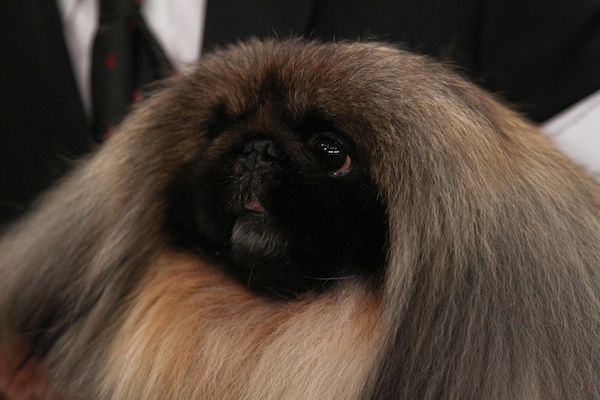
One reason people might think Pekingese are a little slow is the fact that they are somewhat sloth-like. At home, they enjoy lounging about and surveying their domain. This could be due to their physical build or partly held over from their history as sacred pets of the Tang Dynasty in 8th-century China. In fact, Pekingese were called “sleeve dogs” because members of the Imperial household carried their cherished companions around snugly nestled in their voluminous sleeves. Can you blame the Peke for enjoying the easy life? Pekingese are also stubborn and difficult to housebreak. This doesn’t make them dumb, but it does make for some training challenges. Start training early and be consistent.

8. Beagle
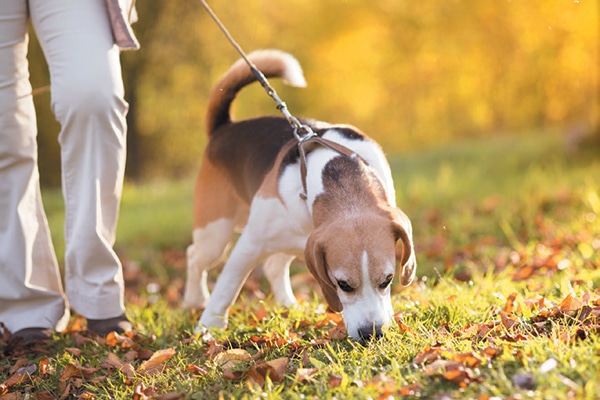
Like Bloodhounds, Beagles like to follow their noses, which can sometimes get them into trouble … and lands them on the list of dumbest dog breeds. The Beagle’s sweet, affectionate nature, combined with his happy-go-lucky outlook might lead you to think he’s empty headed, but this breed is far from dumb. It’s best to keep Beagles on a leash. They can’t resist the urge to explore, smell the world and chase small critters.

9. Mastiff
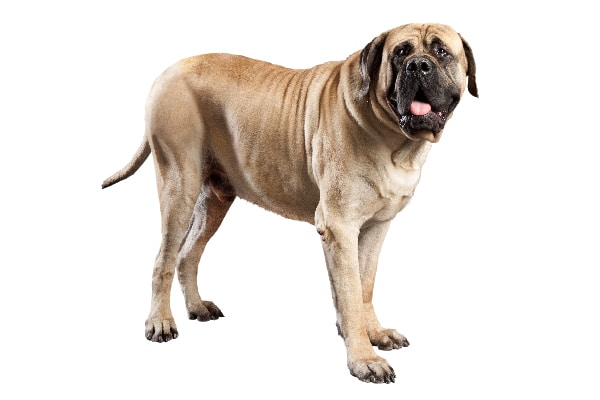
Mastiff.

The large, laid-back Mastiff is a very chill dog. So chill, in fact, that you might thing he’s a little dense. They are also a bit stubborn and might be more challenging to train than some breeds. Again, activity level and ease of training aren’t necessarily good indicators of intelligence. Mastiffs are actually quite bright. Due to their size and natural wariness of strangers, it’s essential for owners to start training and socialization early in puppyhood so Mastiffs develop into well-behaved and discerning companions.

10. Basset Hound
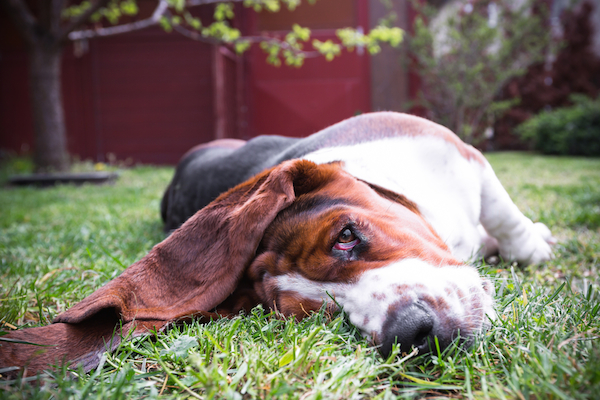
Basset Hound by momente / Shutterstock.

Like the Pekingese, Basset Hounds can be a bit lazy. This could be in part to their long and low bodies or their laid-back personalities. Bassets can be a little stubborn, and like their scenthound cousins the Bloodhounds and the Beagles, Bassets might have trouble ignoring the amazing scents around them long enough to concentrate on learning. However, Bassets want to please their people and are very food motivated, so they do respond well to training. Don’t mistake the Basset’s easy-going personality for lack of intelligence, though. They are bright and affectionate dogs.

The bottom line on the dumbest dog breeds

It’s not fair to label any breed or individual dog dumb. Yes, some dogs are brighter than others, but most dogs are good at something — you just have to figure out what.

“Some dogs do some things better than others, and they have different behaviors.,” Dr. Dodman says. “Police dogs and army dogs tend to be the German Shepherd Dog and Malinois types because they’re easily trainable. Does that mean they’re smart? Or does it mean they’re not so smart because they always follow other people’s directions and don’t think independently? You can argue it both ways.”

Tell us: Is your dog’s breed or breeds on this list of dumbest dog breeds?

Do Dogs Have Periods?

Do dogs have periods? Well, a dog’s estrous cycle is different from the human menstrual cycle — here’s how.


Questions like “Do dogs have belly buttons?” and “Do dogs have periods?” tend to arise from anthropocentrism, the notion that the way humans experience the world is the only way that matters. The first of these questions presumes that, because humans have belly buttons, surely it’s unusual or remarkable that dogs do not.

In fact, humans are the outliers; it is we who are unusual in the grand scheme. “Do dogs have periods?” is a similar question. Among the species that constitute the animal kingdom, only female primates — ranging from the lemur to the human to the gorilla— have periods in the way we generally understand the term.

Menstrual cycle vs. estrous cycle

A female dog with a pink ribbon.

So, do dogs have periods. While mammals of all sorts — including dogs and humans — share the same basic reproductive organs, the ways those organs function is not similar. Human women go through a menstrual cycle, a process of preparation for egg fertilization that lasts an average of 28 days. Female dogs, on the other hand, go through an estrous cycle, similar in purpose, but different in execution, which lasts an average of 180 days.

One reason we ask, “Do female dogs have periods?” is that bloody vaginal discharge is present in both the menstrual cycle and the estrous cycle. In humans, the uterus builds up nutrients for the anticipated growth of a fetus. When an egg goes unfertilized, that material gets secreted from the body. In dogs, when an egg is unfertilized, that nutrient-rich material is absorbed by the body over an extended period of time. The bloody discharge that emerges from female dogs originates in the vagina, not the uterus, and serves a different function. Rather than marking the conclusion of a cycle, in dogs, it signals the onset of fertility.

The estrous cycle in dogs

So, when we’re asking, “Do dogs have periods,” dog menstruation is a misnomer, since dogs do not menstruate. The estrous cycle in dogs consists of four major phases: proestrus, estrus, diestrus and anestrus. A dog’s vagina discharges blood and other fluids during the first two of these phases, most heavily during proestrus. When we say a female dog is in heat, this constitutes the first two phases, proestrus and estrus.

During proestrus, which can last from three to 17 days, a female dog’s body produces large amounts of estrogen. In dogs, this is accompanied by the start of bloody vaginal discharge, which is dark red to begin with, and caused in part by excessive hormone and pheromone production. Dogs also urinate much more frequently during proestrus. The hormones and pheromones in the blood and urine attract potential mates over large distances.

Estrus is the shortest part of the estrous cycle, lasting from four to seven days. This is typically when a dog is primed for mating and fertilization. During estrus, bleeding tends to continue, though it may slow and take on a lighter tint. Discharge in estrus can range from a lighter shade of red to pink to straw-colored. In this phase, a dog may sleep more, be less inclined to play, and begin building a nest in anticipation of pregnancy.

At the start of the third phase, diestrus, the bloody discharge ceases, whether the dog’s egg has been fertilized or not. Diestrus lasts approximately 65 days, about the same span of time that marks a dog’s pregnancy. If the egg is not fertilized, diestrus is the phase during which the nutrients that have accumulated to nourish the anticipated litter of puppies are reabsorbed by the body. The final phase of a dog’s estrous cycle is anestrus, and for this two-to-three month span, the dog is sexually and hormonally inactive.

Dogs do not experience menopause, either

Because the estrous cycle is so drawn out, female dogs tend to go into heat an average of two times per year. Depending on the size and breed of the dog, the capacity to breed can begin as early as six months of age, or as late as 24 months of age. Given that disparity, the length of an estrous cycle is also size- and breed-specific. Some small dog breeds may go through their reproductive cycle up to three times a year, while some very large dog breeds may complete a full cycle only once per year. Yet another difference between human and canine reproduction is that dogs remain capable of breeding well into seniority, and do not go through menopause.

Spay and neuter your dogs!

There is a bit of folk wisdom that is worth dispelling before we conclude. It is thought that a dog’s long-term health is improved if she is allowed to go into heat once before being spayed. Much like, “Don’t cross your eyes or they’ll stay that way,” this is simply untrue. You can safely spay and neuter dogs starting at six to eight weeks of age thanks to modern veterinary practices.

The benefits of spaying your female dogs are many. Spaying your female dog reduces the chances that she will develop breast, ovarian and uterine cancers later in life. It prevents her from developing a deadly bacterial uterine infection called pyometra, which any unspayed female dog can contract at any age, but the risk increases the older she gets. Get your dogs spayed and neutered! It’s better for everyone!

TIPS TO SAVE MONEY FROM VET

dog-money


Have you already heared this “prevention is better than cure”?. Well,this phrase maybe common but you can have this to your mind to save money in vet. Here are some tips to save money from having your pet to vet.

  1. Observe hazards . An ounce of prevention is worth a pound of cure, so begin at the source by cutting your dog or cat off from any potential hazards. Pick up any small objects, put away cleaning supplies and other toxic chemicals, and secure loose cords and wires.
  2. Secure pets with wandering tendencies. Should your pet escape your home, there is a world of possibilities as far as accidents and injuries go. Prevent car accidents, fights with other animals, and other dangers by leashing your pet, setting up a fence, or getting into the routine of monitoring potential escape routes.
  3. Take good care of your pet’s teeth. Poor dental hygiene can not only lead to expensive dental cleanings, but also costly teeth extractions, gum infections, and pain to your pet.
  4. Adopt a grooming routine. Keep your pet’s nails trimmed to prevent them from painful breakage or growing into the paw. With enough practice (and bravery) you can do this at home for much cheaper than visiting a professional.
  5. Get your regular check-ups. Stay on track with routine wellness veterinary exams for your pet in order to catch any health conditions early on, before they become more severe (and more expensive).
  6. Vaccinate your pet. These will help prevent costly health problems.
  7. Prevent parasites. You will definitely save money by administering flea and tick medications regularly. Consider having to fumigate your home for fleas. Yuck!
  8. Feed well. Be sure to feed healthy foods and in the proper amounts.
  9. Exercise regularly. It’s important for your pet to maintain a healthy weight so as to prevent weight-related health conditions such as diabetes or osteoarthritis.
  10. Spay and neuter your pet. Not only does this prevent litters of puppies or kittens that you would have to care for, but it also prevents a number of health conditions.


DOGS AND CHOCOLATES

Why not chocolate?

Chocolate is poisonous to dogs; however, the hazard of chocolate to your dog depends on the type of chocolate, the amount consumed and your dog’s size. In large enough amounts, chocolate and cocoa products can kill your dog.

  • The toxic component of chocolate is theobromine. Humans easily metabolize theobromine, but dogs process it much more slowly, allowing it to build up to toxic levels in their system.
  • A large dog can consume more chocolate than a small dog before suffering ill effects.
  • A small amount of chocolate will probably only give your dog an upset stomach with vomiting or diarrhea.
  • With large amounts, theobromine can produce muscle tremors, seizures, an irregular heartbeat, internal bleeding or a heart attack. The onset of theobromine poisoning is usually marked by severe hyperactivity.

The usual treatment for theobromine poisoning is to induce vomiting within two hours of ingestion. If you are worried or suspect that your dog may have eaten a large quantity of chocolate and they are showing any of the signs listed above, call your veterinarian immediately.

If you have a small dog that has eaten a box of chocolates, you need to call and go to your veterinarian right away. Do not wait.

TIPS: Better have love and attention as a reward for your dogs rather than chocolates.

Watch this video to know what to do in case your dog has eaten a chocolate: 


TODAYS FACTS ABOUT DOGS

“Dogs do speak, but only  those who know how to listen can understand .”– Orhan Pamuk

  1. Your dog can smell your feelings.
    Dogs have the ability  to know what you feel by smelling your perspiration when you become nervous or fearful. It’s also likely how dogs can detect certain diseases or know that a household member is pregnant.
  2. Your dog’s sense of smell is 1,000 to 10 million times better than yours.
    Depending on the breed, your dog has between 125 million to 300 million scent glands — compared to only 5 million for humans. And the part of your dog’s brain that controls smell is 40 times larger than yours. A human’s brain is about 1/40th of their body weight while a dog’s brain is only 1/125th. Don’t feel too smug, though — an ant’s brain is 1/7th its body weight.
  3. Dogs can hear 4 times as far as humans.
    Puppies may be born deaf, but they quickly surpass our hearing abilities. Dogs can also hear higher pitched sounds, detecting a frequency range of 67 to 45,000 hertz (cycles per second). The human range is from 64 to 23,000 hertz. In both dogs and humans, the upper end of hearing range decreases with age.
  4. Your one year-old puppy is as physically mature as a 15-year-old human.
    Of course, different breeds age a little differently. Large dogs age faster than small ones.
  5. On average, a dog’s mouth exerts 320 pounds of pressure.
    In comparison, human beings exert 120 pounds, white sharks exert 600 pounds, and crocodiles exert a whopping 2,500 pounds! Dogs also have ten more adult teeth than humans .
  6. Dogs only have sweat glands in their paws.
    More specifically, they are found between their paw pads. That’s why it can help to wet the bottom of their feet on a hot day, and it’s also why dogs rely on panting as a means of cooling down.
  7. Your dog is as smart as a 2-year-old toddler.
    There’s a reason your tot and your pup get along so well: they speak the same language. Or at least, they likely understand roughly the same number of words and gestures.
  8.  Dogs and cats both slurp water the same way.
    This may be hard to believe since dogs are such messy drinkers, but just like cats, our canine friends bend the tip of their tongue and raise liquid in a column up to their mouths
  9. Your dog does have a sense of time and misses you when you’re gone.
    If you think your dog knows when it’s time for dinner or a walk, you’re right. Dogs pick up on our routines and habits, and they also sense how much time has passed. One study showed how dogs responded differently to their owners being gone for different lengths of time.
  10. Your dog’s whiskers help him “see” in the dark.
    Okay, it’s not quite night-vision or a super power, but those whiskers pick up on even subtle changes in air currents, providing your pup with information about the size, shape, and speed of things nearby. This allows your dog to better sense approaching dangers or prey, even at night.

My Dog Sleeps All Day — Is It Normal?

Ever thought, “My dogs sleeps all day”? You’re not alone. If your dog sleeps all day, it might be normal … or not. We turned to the experts for insight into dog sleeping habits. This is what they said.

Have you ever watched your dog napping — yet again — and thought, “my dog sleeps all day”? You’re not alone. One (of the many!) awesome things about dogs is that they get to sleep as much as they want. Who can blame them either? We would love unlimited opportunities to sleep in!

Thankfully, your dog isn’t actively trying to make you jealous with his sleep habits. In fact, it’s completely normal for dogs to spend most of the day sleeping away. Here are some things to know when you’re thinking “my dog sleeps all day.”

Dogs Naturally Sleep More Than We Do

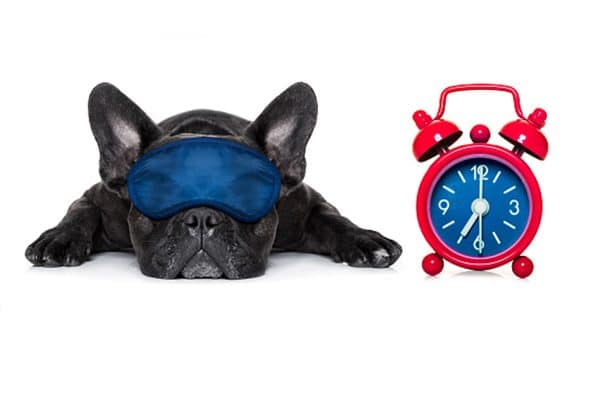
A dog sleeping with an eye mask on and an alarm clock.

According to Dr. Evan Antin, a veterinarian at Conejo Valley Veterinary Hospital in Thousand Oaks, California, dogs generally sleep about 12 to 14 hours a day. Dr. Antin points out that how much a dog sleeps depends a lot on this age, breed and activity level.

“Some breeds tend to be sleepier breeds. Your French and English Bulldogs, they like to lounge, sleep and take it easy,” Dr. Antin says. “For dogs that are more active, such as working dogs, they’ll sleep less since they’re busier.”

Age plays a big part in how much a dog sleeps, too. For example, a puppy tends to sleep up to 16 to 18 hours a day, since growing up takes up a lot of energy. Older dogs spend almost the same amount of time asleep as puppies, which can be due to a number of factors. Senior dogs are often less active, or it may hurt for them to move due to joint pain or arthritis.

Does It Seem Like Your Dog Sleeps All Day? The Upside (or Downside) of Dog Domesticity  

Another reason your dog sleeps all day or at least most of it? The lifestyle we provide dogs doesn’t give them much else to do.

Let Dr. Antin explain.

“Our domesticated pet dogs may sleep more than they need to simply because they have less stimulation and less stressors in their environments that would otherwise give them reasons to be active,” he says. “That is, they don’t need to hunt, find and/or create dens, escape and hide from predators, find mates, etc.”

He compared that to our dogs’ wild cousins. “Wolves and coyotes, etc., have to hunt, find mates, etc., in the wild in order to survive and pass on their genes. When pets live under the care of humans, all of their needs to ‘survive’ are handed to them — that is, food, water and shelter. They’re typically also neutered, so the drive to reproduce is also absent.”

While it might be nice to have free room and board, it can also lead to dogs sleeping more — just for a lack of something to do. And, let’s be honest, that’s preferable to them tearing up the walls (if your dog is doing that, here are some boredom busters). However, it might be worth asking yourself if a dog sleeping out of boredom is healthy for him or not.

Other Reasons a Dog Sleeps All Day

Health issues may also cause a dog to sleep more than usual. “Hormonal imbalances and diseases, like hypothyroidism, can make a dog sleep more,” Dr. Antin explains. “Any other underlying metabolic disease or illness that is taxing on a dog’s body can cause decreased energy, too.”

And cancer or any illness that affects a dog’s body can mean your dog sleeps all day — or at least a lot of it, he adds.

Is Your Dog Sleeping Too Much? How to Know

When our dogs spend so much time asleep, it’s hard to tell if it’s due to medical issues. If you can’t rule out normal factors like age, Dr. Antin says to look for other signs. For example, if your dog isn’t as active as he used to be, plus he’s not eating as much but is gaining weight, that might be hypothyroidism or another metabolic issue.

Basically, if you think your dog sleeps all day, look for other signs that something might be wrong. Then, head to your veterinarian for a checkup.

Can a Dog Not Get Enough Sleep?

On the flipside, sometimes a dog might not get enough sleep. “I have patients with respiratory issues like sleep apnea, or who are too overweight to breathe well, that aren’t getting enough sleep, ” Dr. Antin says. “That can lead to chronic fatigue and low energy levels.” However, Dr. Antin says, those cases are really rare.

Another case where a dog might not be sleeping as much is with older, senile dogs. Their schedules might get turned around, and they may sleep less at night due to them wandering around confused. It may not be too much of an issue though — Dr. Antin points out that they tend to make up for it during the day.

But Dogs Sleep Like Us — Kind Of

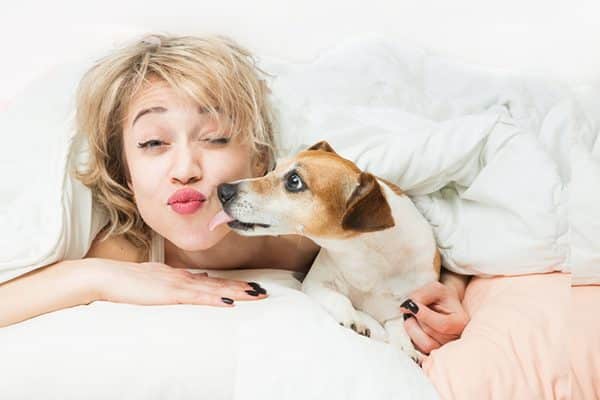
A woman in bed with her dog getting a kiss from him.

While it’s easy to be jealous of your dog’s sleeping habits (I know I am sometimes), it turns out that how our dogs sleep is a lot like how we do. According to Live Science, dogs go through “stages of wakefulness, rapid-eye-movement (REM) sleep and non-rapid-eye-movement sleep.” During the REM stage, your dog is most likely dreaming and you might see him reacting to it. He’ll twitch, move his feet or even yip out loud. Watching your dog dream can be both adorable and hilarious — either way, when it happens, you’ll be glad that you’re awake to see it.

Why is My Dog Sleeping in Bed With Me? 10 Reasons

Ever wondered … “Why is my dog sleeping in bed with me when she has her OWN bed?” We look at the reasons why your bed is better.

lemma of the modern day dog lover: You finally find that totally washable, ultra-comfortable dog bed that manages to match both your decor and budget. You test the memory foam yourself, curling up like a dog in front of bemused pet store employees. You bring your purchase home and present it to your pooch, hoping she’ll love it. Instead, she takes one sniff before bounding up onto the only bed she’ll ever love — yours. So, why is your dog sleeping in bed with you even though there are other comfy options available?

There’s plenty of reasons why dogs can’t resist the big bed. Maybe if we understand them we’ll have a better chance of getting them out of it.

1. They’re lonely

Here’s a simple answer to, “Why is my dog sleeping in bed with me?” Dogs are like ex-boyfriends: They don’t like to sleep alone and, if you let them in your bed once, they want to get in there every night. They both make a whimpering sound when you tell them to sleep in their own bed.

2. Sometimes they get cold

Sometimes a dog just wants a cuddle buddy to stay warm. Photography ©molka | Getty Images.

A nice duvet and a human-shaped space heater make the big bed seem a lot cozier than the dog bed that offers nothing more than their own body heat. Why shiver by your lonesome when you can warm your cold nose on a human’s warm feet?

3. The big bed smells good

There’s a reason why there are scented candles that smell like freshly laundered sheets — it’s an amazing scent. That scent (well, preserving it) is why many humans buy their dog their own bed, but it’s also the reason why our dogs are drawn to ours.

4. The big bed smells like THEM!

Another answer to, “Why is my dog sleeping in bed with me?” Our beds smell better than theirs, but, unfortunately, that’s only true if they sleep in theirs. They may start sleeping in our bed because it smells better than theirs, but they stay because, eventually, it smells like it’s theirs.

5. They love to stretch out

Bigger space might be the reason why your dog is sleeping in bed with you. Photography ©grki | Getty Images.

Many dog beds are designed with circle sleepers in mind, but if your dog doesn’t like to form a doggie doughnut when she beds down for the evening, a circular bed just isn’t going to do. The human mattress offers plenty of rectangular real estate for long, large-breed limbs to stretch out — the only drawback is the humans are often in the way!

6. They feel left out

Humans have different classifications of love — parental love, platonic love, romantic love. Dogs just love. That’s why they don’t really understand that some of the nocturnal cuddles that happen in the human bed are not for them. Nothing kills the mood like a canine à trois, so sometimes it’s better just to lock the door.

7. They’re entitled

What's mine is yours, right? Photography ©Nynke van Holten | Getty Images.

Another easy way to answer,”Why is my dog sleeping in bed with me?” Well, we call them Prince or Princess and then we expect them to sleep on the floor? Royalty will not be demoted, human.

8. Nothing like a good thread count

Most dog bed covers are made for washability, not luxury, and yet many dogs somehow recognize good quality linens. They know a high thread count when they see one, and when they see it on your bed they know their butt belongs on that Egyptian cotton.

9. They know it’s wrong

She thinks you're at work when she takes a nap in your bed. Photography ©damedeeso | Getty Images.

If you’ve ever smoked a cigarette in a high school bathroom or didn’t come to a complete stop at a stop sign when there were no other cars in sight, you know how your dog feels when she’s rolling around on your bed when (she thinks) you’re at work — it’s deliciously wrong.

You also know how your high school principal or that cop who gave you the ticket felt about you — mildly annoyed.

10. But they love you

The bottom line on and the most definitive answer to, “Why is my dog sleeping in bed with me?” They just want to sleep next to their best friend, and really, how can we blame them for that?

5 Easy Backyard Games for Dogs

Celebrate the final days of summer with your four-legged friend! We’ve complied a list backyard games for dogs that will tire out any pup, from retrieval games to simple agility.


Backyard games are a great source of activity for high-energy dogs, those who are watching their weight, and just about any pup who loves to play. They can also provide your pooch with a few behaviors that will impress your friends — especially the nosy neighbors who are always looking over your fence. Here are five backyard games for dogs to make the most of those final days of summer!

1. Retrieval games

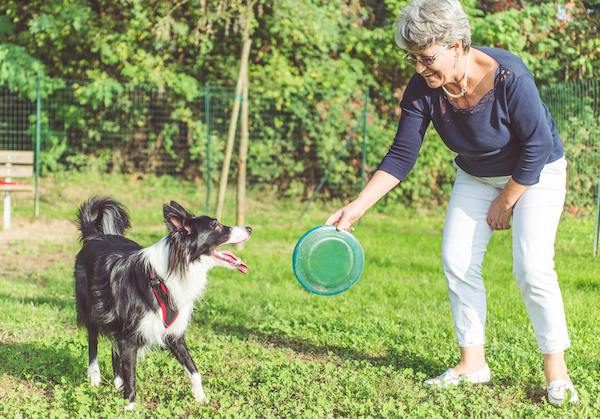
A dog running and jumping in the air after a Frisbee.

“Fetch” is standard backyard fare for dogs with a decent retrieval instinct. Running to retrieve a ball or toy is great exercise and reinforces the human-doggie bond.

Some dogs don’t need to be taught to retrieve toys. You know you have one of these pups if you’ve ever tripped over a Frisbee or have had a slobbery shoe set at your feet. These dogs are a delight when playing retrieval games and may exhaust themselves quickly, so offer enough water during playtime.

You can encourage dogs without an ingrained interest in retrieving to pick up a ball, too. How? By smearing peanut butter or cheese on it; you can also use your dog’s favorite toy. Some dogs aren’t “mouthy” and won’t pick up a thrown toy, but you can reinforce the “picking up” behavior by first rewarding any contact with the ball with a treat.

As you continue to teach this game over a series of days or weeks, raise the criteria so that you eventually only reward for picking up the ball, and then for bringing it back to you.

For the possessive dog, use a ball rather than a favorite toy, and once it’s in your dog’s mouth, show him that you have treats. Than, offer to trade the ball for a treat. Do this until your dog understands that if he chases and then relinquishes the ball, something good happens. Eventually, he’ll forget about the treat and relish the game for the game’s sake.

2. Casual agility

Agility is an athletic and competitive dog sport that requires a dog to navigate an obstacle course. You don’t have to enroll your dogs in classes or compete to have fun with it. Inexpensive backyard agility equipment is available online, or you can even make your own. Choose the agility equipment that would best suit your dog: jumps, tunnels, weave poles, tire jumps, chutes, or teeter-totters.

Jumps are a great place to start, since it’s easy to teach a dog to comply using treats and positive reinforcement. Start with the jump pole on the ground, and have your dog walk over it. Once he’s good at that, raise the jump just a few inches, and continue raising the jump as your dog becomes familiar with the game.

3. Treat-dispensing toys

A dog with a treat on his nose.

These are wonderful to use in the backyard because your dog will have ample space to play with them and you can leave all the resulting slobber and noise outside.

Once your dog understands how to use these toys, you can start hiding them in corners of the yard, or under bushes and behind trees to make the game even more challenging. For dogs who play rough, the Unbreakoball is a fun choice, as are Kong toys and the Tug-a-Jug from Petsafe. For puppies, use a soft toy that’s easy on young teeth and gums.

4. Digging in the sandbox

For dogs who like to dig, having a dedicated sandbox is like owning a little corner of heaven. Use a child’s sandbox with a cover so that neighborhood cats don’t make it a litter box and leave your dogs a few tasty snacks. Use only clean sand from your local hardware store. Bury your dog’s favorite chewies in the sandbox and show him how to dig them up. Soon he’ll understand that he will be rewarded for his efforts — and you’ll avoid having to fill in another hole along your fence.

5. Staying cool in the puppy pool

Dog in a kiddie pool in summer.

A shallow plastic pool can mean hours of backyard fun during the summer months, when your dog may want to cool off with a dip. Toss apple slices, baby carrots, or your dog’s favorite treat into the pool for a kind of “bobbing for treats” game. This is a great way to persuade skeptical pups to get their feet wet. You can also fill the pool with floating toys and balls.

Backyard safety tips

  • Only play with an unleashed dog in a fully fenced backyard to avoid losing him to something more interesting, like a squirrel or another dog.
  • Always supervise any backyard game, especially if toys or water are involved.
  • Refrain from playing “chase” as a backyard game. This teaches your dog to run away from you rather than come to you.

Tell us: What are your favorite backyard games to play with your dogs?

10 Signs Your Dog Wants to Go for a Walk

Ever wondered … “How can I tell when my dog wants to go for a walk?” We look at 10 signs that your dog wants to go for a walk.


Most of us dog lovers also love walking dogs, but even the most canine-obsessed step counters among us have days when we are preoccupied with other things. Our dogs, though, are focused 100 percent of the time.

They will not be distracted from their daily constitutional, and it only takes one look in their eyes to realize that while your mind has been swirling with a million thoughts, your dog’s has held just one that he’s been desperately trying to telepathically communicate: Walk me!

We may not be mind readers, but if we let our busy brains settle down, we’ll notice the not-so-subtle signs our buddies are showing us. Who needs a beeping Fitbit when you’ve got a canine companion to remind you to get up and move? Here are 10 ways to tell if your dog wants to put paw to pavement.

1. The saddest sigh in the world

A dog lying down with his ear folded over.

Your dog flops and lands with a thud, and exhales enough hot breath to fill a king-size air mattress. You feel the gust of breath, but you also hear it: the loudest, saddest, most overacted sigh in the world. This is the sound of walk wanting.

2. He’s leashing up without you

You're dog is ready for a walk if he is leashing up without you. Photography ©K_Thalhofer | Getty Images.

He’s prepared for a walk, so you’d better get prepared, too. If your dog is wandering around the house with his leash hanging from his mouth, or if he’s somehow managed to open the closet and find his own harness, you should a) be impressed, and b) be ready to go.

3. He’s window watching

Your dog is jealously watching everyone else on a walk outside. Photography ©mstroz | Getty Images.

Back and forth, back and forth, a dog head moves, scanning the length of the window, big eyes jealously watching every pair of feet that walk down the street. In the most desperate cases, this plea for a walk is combined with barking. (Maybe if I get their attention, one of those pedestrians will walk me! That’ll make my human jealous.)

4. He’s doing the pee-pee paso doble

Happy, excited dog by bowl of water.

Unless your dog has been cast on Dancing With the Pups, fancy footwork by the door can only mean one thing: Hurry, human!

5. He’s fetching your footwear

Your dog is helping you get ready for a walk by grabbing your shoes. Photography ©BilevichOlga | Getty Images.

Your shoes have been moved from the rack to the doormat without your assistance. Either your house is haunted, or an earthly creature is trying to tell you something. Do you have a ghost or a Golden Retriever? Either way, someone wants you out of the house.

6. He’s wagging like he’s never wagged before

That tail wagging means your dog is ready to go. Photography ©RichLegg | Getty Images.

You didn’t say “walk,” but he thought you did. Guess you’re going now before he wags the house down. Seriously, the place is shaking.

7. He looks like he’s going with or without you

A happy Golden Retriever dog looking up and smiling.

He’s standing by the door with a look that can only be described as one part disappointment, one part demand. “Get your keys, human, or the next time you open this door for FedEx I’m gonna bolt.” This is not an empty threat. You should get the leash.

8. He’s singing the walk song

He will howl until you are ready. Photography ©GlobalP | Getty Images.

It’s the kind of noise you didn’t even know could come from a dog, but to him, this is an anthem that gets action. If this noisy dog could talk he would say, “If I howl loud enough to wake the neighbors maybe I’ll get my way.”

9. He’s doing a pre-walk warm up

Happy, excited dog with leash in his mouth.

And warming your heart. A big stretch, followed by a yoga pose (the perfect Downward Dog) followed by a big kiss for the human. They’re so cute when they want something.

10. He’s a DOG

Excited, happy dog on leash with harness.

Is there a dog in your house? He WANTS a walk.

Tell us: What are the signs that YOUR dog wants to go for a walk? Does he display any of these signals when he wants to go for a walk?

What Size Dog Should You Get? Here Are Some Things to Consider

Having trouble deciding what size dog is right for you? Let’s take a look at the three main size groups — small or toy, medium, and large or giant — and highlight their challenges and benefits.

Dogs come in all sizes from diminutive to giant, and each have their challenges and benefits, some of which you might not have thought about.

“Size does not always dictate that a dog may be more or less work, but there are some things to consider when looking at getting a dog,” says Megan Stanley, CPDT-KA, CBCC-KA, chair of the board of directors for the Association of Professional Dog Trainers and owner of Dogma Training & Pet Services in Calgary, Alberta, Canada.

According to Megan, small dogs do not necessarily mean less exercise. “They can also be at higher risk for accidental injury, especially households with small children who may fall or step down on the dog. Large dogs tend to need more room to move, and problem behaviors, such as jumping or pulling on a leash, can be more difficult to deal with due to the dog’s size.”

Let’s look at the three main size groups — small or toy, medium, and large or giant — and highlight their challenges and benefits.

1. Large or giant dogs  (50-plus pounds)

Always supervise interactions between children and dogs — no matter what the dog’s size may be. Photography © JackF | Getty Images.

No doubt about it, big dogs are magnificent to behold. Large dogs (even friendly ones) also make people think twice about approaching your home. Most large and giant breeds need a lot of space, but some are surprisingly low energy.

For instance, Greyhounds are happy to hang around an apartment if you provide daily walks and the opportunity to get out and stretch their legs somewhere safe off leash.

A large, strong dog requires an owner who is physically capable of handling them. Consider not only the puppy and adult years, but seniorhood, too. Large dogs with arthritis or other ailments might need help climbing stairs or getting in and out of the car — no small feat when your dog weighs 100 pounds!

Some other things to think about: Bigger dogs make bigger messes. They have more hair, more drool and more poop! Consider whether you travel a lot and want to take your dog with you. Large and giant breeds take up a lot of room in a car and must travel in the cargo hold when flying (an additional cost).

Cost is another consideration. “From a financial standpoint, the larger the dog, the more it costs to feed and care for them,” Megan says. The cost of food, crates and beds, certain medications, grooming and even surgery climbs higher the more a dog weighs.

The following breeds and mixes of these breeds on average weigh in at more than 100 pounds:

  1. Black Russian Terrier
  2. Bullmastiff
  3. Dogue de Bordeaux
  4. Great Dane
  5. Irish Wolfhound
  6. Leonberger
  7. Mastiff
  8. Neapolitan Mastiff
  9. Newfoundland
  10. Scottish Deerhound
  11. Saint Bernard

2. Medium dogs (30 to 50 pounds)

This size is great for people who like a “big dog” but don’t have the space or strength required to handle a large or giant breed. A medium-sized dog needs a little less space than a giant breed but isn’t delicate like some of the smaller dogs.

“A medium to larger dog would be best for an active lifestyle,” Megan says. If you like jogging, hiking and camping, this size might be the ticket.

3. Small and toy dogs (less than 30 pounds)

It's often easier to care for two small dogs than two big ones. Photography © GlobalP | Getty Images.

Small dogs are great for people who live in apartments or spend a lot of time relaxing at home. In general, small dogs need less exercise than bigger dogs. (Exception is high-energy small breeds.)

It also costs less to feed and care for them. Small dogs are easy to pick up and carry, and they are portable enough to accompany you wherever you go. They are especially great for jet-setters who want to fly and stay in hotels with their pet.

This is not to say that smaller dogs are always easier, especially when it comes to exercise and attention. “Certain small dog breeds can require extensive amounts of physical and mental exercise,” Megan says. “For example, a Russell Terrier is a breed known for its tenacity and energy.”

If you long for more than one dog, it’s often easier to care for two small ones than two big ones. However, small dogs are more fragile. They are not a great choice for families with kids younger than 5 years old or households that already have large, rambunctious dogs.

The following breeds and mixes of these breeds on average weigh in at less than 12 pounds:

  1. Chihuahua
  2. Brussels Griffon
  3. Italian Greyhound
  4. Japanese Chin
  5. Maltese
  6. Miniature Pinscher
  7. Papillon
  8. Pomeranian
  9. Toy Fox Terrier
  10. Toy Poodle
  11. Yorkshire Terrier